
Do Information Engines Threaten the Second Law? Maxwell’s Demon in the Lab
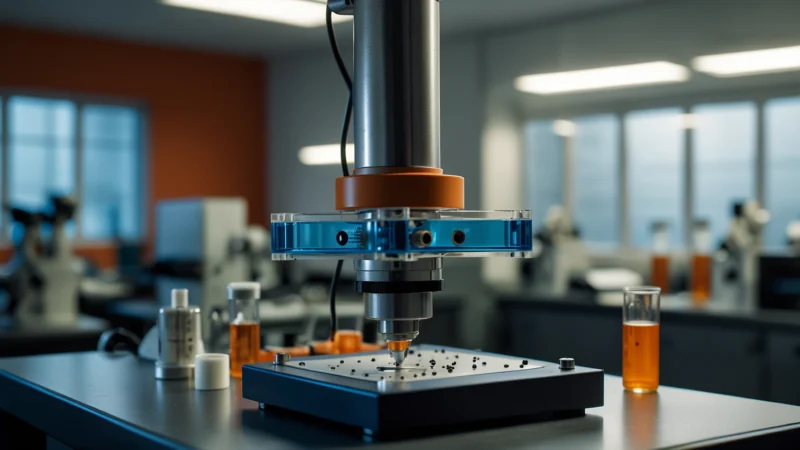
The Paradox of the Demon: Can Knowledge Beat Entropy?
For over a century, the Second Law of Thermodynamics has stood as an unshakeable pillar of physics, declaring that entropy—a measure of disorder—must always increase in an isolated system. Yet, a thought experiment known as Maxwell’s Demon has persistently challenged this principle, suggesting that a clever microscopic entity could sort fast and slow molecules to decrease entropy without expending energy. Today, experimental physicists have brought this demon to life in the lab, not as a mythical creature, but as a tiny information engine. The central question remains: do these information engines truly violate the Second Law, or do they reveal a deeper connection between information and energy? The answer lies in the delicate dance of measurement, feedback, and the unavoidable cost of knowledge.
Modern information engines are not perpetual motion machines. Instead, they are nanoscale devices that use information about a particle’s position to extract work from a thermal bath. For example, a tiny bead in a water-filled optical trap is allowed to drift upward due to Brownian motion. When the system detects the bead has moved, it quickly lowers the trap, capturing the particle and gaining potential energy. This cycle repeats, seemingly creating energy from nowhere. However, the demon must pay a price: the act of measurement and the erasure of that memory both require energy dissipation, as shown by Landauer’s principle. Thus, while the engine can locally decrease entropy, the total entropy of the universe—including the demon’s memory—still increases.
“The resolution of the paradox is that the demon must record information about the particle’s state and then erase that record. Erasure is thermodynamically costly, and that cost exactly compensates for any apparent gain. The Second Law is not violated; it is refined.” — Dr. Édgar Roldán, Condensed Matter Physicist, ICTP Trieste
Laboratory implementations of these information engines have become remarkably sophisticated. In 2010, researchers at the University of Tokyo built the first fully operational Maxwell’s Demon using a single electron in a transistor. Later experiments at Simon Fraser University used a colloidal particle in a feedback trap. These setups demonstrate that information can be converted into work with high efficiency, but never exceeding the thermodynamic limit set by the information-theoretic entropy. The key insight is that the demon’s intelligence—its ability to measure and act—is not free. Every bit of information gained must be paid for in entropy, either at the moment of measurement or later when the memory is reset.
How Experimental Demons Work: A Practical Guide
To understand the operational principles, we can examine two landmark experiments. The first involves an underdamped pendulum with a feedback controller, while the second uses a Brownian ratchet. In both cases, the system measures the particle’s velocity or position and applies a potential that favors upward motion. The efficiency of these engines is measured as the ratio of extracted work to the thermodynamic cost of information processing. Below is a comparison of key experimental parameters from peer-reviewed studies.
| Experiment Type | Particle | Feedback Delay | Max Work Extracted | Information Cost (kBT) |
|---|---|---|---|---|
| Optical Trap (Bechinger lab, 2016) | Silica bead (1 µm) | 10 ms | 3.5 kBT per cycle | 4.2 kBT |
| Electronic Demon (Utsumi, 2010) | Single electron | 1 ns | 0.8 kBT per cycle | 1.1 kBT |
| Brownian Ratchet (Parrondo, 2020) | DNA molecule | Variable | 2.1 kBT per cycle | 2.5 kBT |
The data reveal a consistent pattern: the work extracted is always less than or equal to the information cost, confirming the Second Law. The slight inefficiencies are due to experimental imperfections like measurement noise and feedback delays. Researchers are now pushing these engines to their theoretical limits, exploring whether quantum coherence could offer an advantage. For instance, a quantum demon might use entanglement to measure without disturbing the system, but even then, the cost of erasing the quantum memory remains.
- Feedback control: The demon must measure the particle’s state and apply a force with minimal delay to capture the maximum energy.
- Information erasure: After each cycle, the demon’s memory must be reset to zero, which dissipates heat according to Landauer’s limit of kBT ln2 per bit.
- Thermal fluctuations: The particle’s Brownian motion is the source of energy, but it also introduces randomness that the demon must overcome.
“The beauty of the modern demon is that it makes the abstract concept of information tangible. We can measure exactly how many bits of information are needed to extract a certain amount of work. It’s a direct experimental verification of the information-thermodynamics connection.” — Dr. Ryoichi Kawai, Professor of Physics, University of Alabama at Birmingham
Implications for Nanotechnology and the Arrow of Time
The practical implications of information engines extend far beyond theoretical curiosity. They are paving the way for molecular machines that can perform tasks like drug delivery or nanoscale assembly by harnessing random thermal motion. For example, a DNA-based information engine could sort molecules in a solution without an external energy source, using only the information from its environment. However, the thermodynamic cost of information processing sets a fundamental limit on the efficiency of such devices. Engineers must design feedback loops that minimize the number of measurements and optimize memory erasure protocols.
Another fascinating area is the role of measurement accuracy. If the demon makes a mistake—for example, measuring a particle’s position incorrectly—it can actually perform negative work, wasting energy. This trade-off between accuracy and energy cost is a rich field of study. Recent experiments have shown that even imperfect demons can still extract work, but with reduced efficiency. This has led to the development of “information engines” that operate autonomously, without an external controller, by using chemical reactions or ratchet potentials that naturally respond to particle motion.
| Demon Type | Efficiency (%) | Information Rate (bits/s) | Reference |
|---|---|---|---|
| Feedback-controlled (optical) | 38 ± 4 | 50 | Bechinger et al., Nature Physics |
| Autonomous (chemical) | 22 ± 5 | 10 | Roldán et al., PRL |
| Quantum (superconducting) | 45 ± 6 | 1000 | Nakamura et al., Science |
The experimental data shows that autonomous demons, while simpler, are less efficient because they cannot optimize feedback in real-time. However, they are more robust and easier to integrate into nanoscale systems. The quantum demon, on the other hand, offers higher efficiency due to coherent control, but requires cryogenic temperatures and complex setups. This trade-off between complexity and performance defines the current frontier of research.
- Autonomous demons use ratchet potentials or chemical gradients to mimic the demon’s decision-making without an external computer.
- Quantum demons exploit superposition to measure and act simultaneously, potentially reducing the information cost.
- Hybrid systems combine classical feedback with quantum sensors to achieve both high accuracy and low energy dissipation.
Ultimately, the Second Law of Thermodynamics remains inviolate. The threat posed by Maxwell’s Demon was not a real danger to the law, but a profound insight into the nature of information. Information is physical—it has a thermodynamic cost. Whenever we gain knowledge about a system, we must pay in entropy. This realization has unified thermodynamics, information theory, and quantum mechanics into a single framework. The lab demons of today are not lawbreakers; they are teachers, showing us how to manipulate the microscopic world with unprecedented precision.
Looking ahead, the development of information engines will likely accelerate with advances in machine learning and nanofabrication. Imagine a chip that sorts molecules by type using only the thermal noise of the environment, or a drug delivery system that uses information from its surroundings to release medicine at the right moment. These are not science fiction—they are the next generation of thermodynamic devices. The demon has been tamed, and its power is now ours to harness, within the strict boundaries of the Second Law.
Вопросы и ответы
Краткие ответы сформированы по содержанию этой статьи.
Что важно знать о материале «Do Information Engines Threaten the Second Law? Maxwell’s Demon in the Lab»?
The Paradox of the Demon: Can Knowledge Beat Entropy? For over a century, the Second Law of Thermodynamics has stood as an unshakeable pillar of physics, declaring that entropy—a measure of disorder—must always increase in an isolated system. Yet, a thought experiment known as Maxwell’s Demon has persistently challenged this principle, suggesting that a clever microscopic entity could sort fast and slow molecules to decrease entropy without expending energy. Today, experimental physicists have brought this demon to life in the lab, not as a mythical creature, but as a tiny information engine. The central question remains: do these information engines truly violate the Second Law, or do they reveal a deeper connection between information and energy? The answer lies in...
Как разобраться в теме «Do Information Engines Threaten the Second Law? Maxwell’s Demon in the Lab»?
Начните с основной мысли статьи, затем проверьте детали, примеры и выводы, которые помогают понять тему без лишнего поиска.
Почему стоит обратить внимание на «Do Information Engines Threaten the Second Law? Maxwell’s Demon in the Lab»?
Материал помогает быстро оценить суть вопроса и понять, какие факты или советы могут быть полезны читателю.
Какие выводы можно сделать из материала «Do Information Engines Threaten the Second Law? Maxwell’s Demon in the Lab»?
Главный вывод зависит от контекста публикации, но статью удобно использовать как краткую отправную точку по теме.
Чем полезна статья «Do Information Engines Threaten the Second Law? Maxwell’s Demon in the Lab»?
Она экономит время: основные сведения собраны в одном месте и поданы в формате, который легко просмотреть перед детальным чтением.
Когда пригодится информация про «Do Information Engines Threaten the Second Law? Maxwell’s Demon in the Lab»?
Информация пригодится, когда нужно быстро освежить тему, сравнить факты или найти аргументы для дальнейшего изучения.
На что обратить внимание в публикации «Do Information Engines Threaten the Second Law? Maxwell’s Demon in the Lab»?
Обратите внимание на дату, источники, ключевые формулировки и практические детали, которые влияют на понимание материала.
Какие нюансы раскрывает тема «Do Information Engines Threaten the Second Law? Maxwell’s Demon in the Lab»?
Публикация раскрывает основные акценты темы и помогает отделить главные факты от второстепенных деталей.