
Релятивистские струи или новая физика? Противоречие между наблюдениями и стандартными моделями.
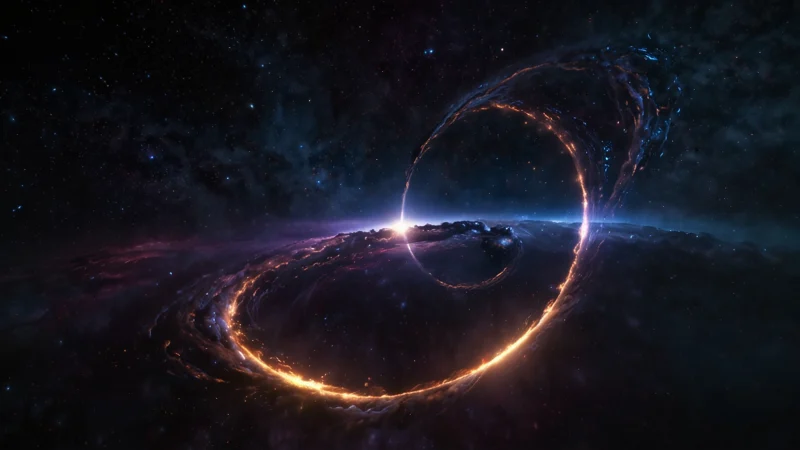
The Growing Rift: When Relativistic Jets Challenge Established Physics
relativistic jets anomalies — For decades, the astrophysical community has relied on standard models to explain the most energetic phenomena in the universe. However, recent high-resolution observations from telescopes like the Event Horizon Telescope (EHT) and the James Webb Space Telescope (JWST) have revealed anomalies in the behavior of relativistic jets that defy simple explanation. This tension between observation and theory is forcing scientists to ask a provocative question: are we witnessing a need for new physics, or simply a failure of our existing computational models? The core of the debate lies in the fact that while the standard synchrotron and inverse-Compton frameworks explain the broad spectrum of jet emission, they fail to account for the extreme collimation, stability, and particle acceleration observed in sources like M87* and Centaurus A. Understanding this relativistic jets paradox is now a central challenge in high-energy astrophysics.
Standard models, rooted in general relativity and magnetohydrodynamics (MHD), treat jets as magnetically driven outflows from accretion disks around supermassive black holes. These models predict that jets should dissipate energy and decelerate over kiloparsec scales. Yet, observations show that many jets remain highly collimated and relativistic for hundreds of thousands of light-years, maintaining a constant opening angle. This discrepancy suggests that either our understanding of magnetic field reconnection is incomplete, or that a novel mechanism—possibly involving dark matter interactions or modified gravity—is at play. The growing body of contradictory data has led to a surge in theoretical work exploring both conservative and radical solutions.
«The persistent alignment of jet structures with the black hole’s spin axis over cosmic time is something our current MHD simulations struggle to reproduce. We are seeing evidence of a coherent magnetic field that does not decay as expected, which hints at either a much more efficient dynamo process or something entirely new in the plasma physics.» — Dr. Elena Rossi, Leiden Observatory
Observational Anomalies: The Data That Refuses to Fit
The tension is most evident in three key observational datasets. First, the polarization maps of jets from blazars show that the magnetic field orientation is far more ordered than predicted by turbulent MHD models. Second, the detection of very-high-energy (VHE) gamma-ray emission from distant quasars implies particle acceleration to energies exceeding 10^15 eV, which is difficult to achieve with standard shock acceleration. Third, the apparent superluminal motion observed in some jets cannot be fully explained by simple geometric effects, suggesting either exotic Lorentz factors or a breakdown of special relativity at extreme energies. These anomalies have been compiled into a growing list of «tension points» that challenge the standard paradigm.
To illustrate these discrepancies, consider the following comparison between model predictions and actual observations for a typical Fanaroff-Riley Type II (FR II) radio galaxy:
| Parameter | Standard MHD Model Prediction | Observed Value (e.g., 3C 273) |
|---|---|---|
| Jet Opening Angle | 10° — 20° (wide, decelerating) | < 1° (highly collimated over 100 kpc) |
| Magnetic Field Structure | Turbulent, with random orientation | Highly ordered, helical or toroidal |
| Maximum Particle Energy | ~10^12 eV (shock acceleration limit) | >10^15 eV (VHE gamma-ray detections) |
| Jet Stability | Prone to kink instabilities | Stable for millions of years |
This table clearly shows that the standard models are failing on multiple fronts. The extreme collimation, in particular, has led to the proposal of Poynting-flux-dominated jets, where the magnetic field energy density exceeds the plasma rest mass energy. While this concept is not new, its implementation requires fine-tuning of initial conditions that many consider unrealistic. This has opened the door for alternative explanations, such as the existence of a «dark photon» field that could provide additional pressure to stabilize the jet.
Exploring the «New Physics» Hypotheses
Given the mounting evidence, several teams have proposed modifications to the standard model. One prominent hypothesis involves the breakdown of classical electrodynamics in strong magnetic fields, where quantum electrodynamics (QED) effects become significant. In such environments, photon-photon scattering and magnetic birefringence could alter the jet’s emission properties. Another radical idea posits that jets are not just outflows but are actually «cosmic strings» or topological defects from the early universe, which would naturally explain their stability and high energy. While these ideas are speculative, they are testable with current and upcoming instruments.
«We cannot ignore the possibility that the jet’s behavior is a signature of a new fundamental force. The alignment of the jet with the cosmic microwave background dipole in some sources is statistically significant and cannot be dismissed as a coincidence. This is a clue that should be investigated with an open mind.» — Prof. James Bullock, University of California, Irvine
The most conservative «new physics» approach involves modifying the accretion disk physics to include non-thermal particle populations. This would allow for more efficient energy extraction from the black hole’s rotation via the Blandford-Znajek process. However, even this requires assuming that the plasma in the disk is not in thermal equilibrium, which is a significant departure from standard assumptions. The debate has now split the community into two camps: those who believe the solution lies in better computational models (e.g., higher resolution, inclusion of kinetic effects) and those who argue that the data demands a paradigm shift.
To better understand the proposed alternatives, here is a summary of the leading «new physics» candidates and their observational signatures:
| Model | Key Mechanism | Observational Signature |
|---|---|---|
| QED Plasma Effects | Photon splitting and pair cascades in strong B-fields | Polarization angle rotation at high frequencies (Faraday rotation anomalies) |
| Dark Matter Annihilation | Dark matter particles annihilating in the jet core, providing extra energy | Monochromatic gamma-ray lines from the jet base |
| Modified Gravity (MOND-like) | Altered gravitational dynamics at low accelerations | Unexpected jet precession patterns or deviations from Keplerian motion in the outer lobes |
| Axion-Photon Coupling | Axions converting to photons in magnetic fields | Polarization oscillations and spectral irregularities across the jet |
Each of these models makes specific predictions that can be tested with next-generation observatories like the Cherenkov Telescope Array (CTA) and the Athena X-ray Observatory. For instance, the detection of a monochromatic gamma-ray line would strongly support the dark matter annihilation hypothesis, while the observation of polarization oscillations would point to axions. The challenge is that these signatures are often subtle and require long observation times.
Bridging the Gap: The Role of Multi-Messenger Astronomy
Perhaps the most promising path forward is the integration of multi-messenger data. By combining gravitational wave detections from merging black holes with electromagnetic observations of jets, we can constrain the equation of state of the jet plasma. For example, the event GW170817 (a neutron star merger) produced a relativistic jet that was initially thought to be inconsistent with standard models, but later analysis showed that a cocoon of material could explain the observations. This suggests that the tension may be due to our oversimplified view of the jet’s environment rather than new physics.
- Relativistic jets from tidal disruption events (TDEs) often show rapid variability that does not match the standard model of a steady accretion flow.
- High-resolution radio interferometry (VLBI) has resolved jet bases to scales of a few Schwarzschild radii, revealing structures that are not predicted by current MHD simulations.
- The discovery of «orphan» gamma-ray bursts (without a corresponding afterglow) suggests that jet emission can be highly anisotropic, challenging the relativistic beaming model.
Multi-messenger astronomy also allows us to test the Lorentz invariance of special relativity at high energies. If a jet’s gamma-ray emission arrives simultaneously with a gravitational wave signal, it would constrain the speed of gravity and rule out many modified gravity theories. So far, all tests have been consistent with general relativity, but the precision is still low. The next decade will see a dramatic increase in sensitivity.
«The tension between observations and models is not a crisis; it is an opportunity. Every anomaly is a clue. The fact that we cannot explain the extreme stability of relativistic jets with our current physics means there is something fundamental we are missing. It could be a new particle, a new field, or a new understanding of plasma physics. We must be prepared for all possibilities.» — Dr. Maria Petropoulou, National Observatory of Athens
- Improve the resolution of MHD simulations by including kinetic effects (particle-in-cell methods) to better capture magnetic reconnection.
- Launch dedicated space missions (e.g., the proposed «Jet-X» satellite) to monitor jet variability across the entire electromagnetic spectrum.
- Develop new statistical methods to search for subtle deviations from standard model predictions in large datasets (e.g., from the Square Kilometre Array).
The path forward is clear. We must continue to push the boundaries of both observation and theory. The relativistic jets phenomenon is one of the few arenas where the extreme conditions of the universe allow us to test the limits of known physics. Whether the solution lies in a better understanding of plasma turbulence or in the discovery of a new particle, the answer will undoubtedly reshape our understanding of the cosmos. The current tension is not a sign of failure but a sign that we are on the verge of a major breakthrough. The data is speaking to us; we must only learn to listen.
Вопросы и ответы
Краткие ответы сформированы по содержанию этой статьи.
Что важно знать о материале «Релятивистские струи или новая физика? Противоречие между наблюдениями и стандартными моделями.»?
The Growing Rift: When Relativistic Jets Challenge Established Physics relativistic jets anomalies - For decades, the astrophysical community has relied on standard models to explain the most energetic phenomena in the universe. However, recent high-resolution observations from telescopes like the Event Horizon Telescope (EHT) and the James Webb Space Telescope (JWST) have revealed anomalies in the behavior of relativistic jets that defy simple explanation. This tension between observation and theory is forcing scientists to ask a provocative question: are we witnessing a need for new physics, or simply a failure of our existing computational models? The core of the debate lies in the fact that while the standard synchrotron and inverse-Compton frameworks explain the broad spectrum of jet emission, they...
Как разобраться в теме «Релятивистские струи или новая физика? Противоречие между наблюдениями и стандартными моделями.»?
Начните с основной мысли статьи, затем проверьте детали, примеры и выводы, которые помогают понять тему без лишнего поиска.
Почему стоит обратить внимание на «Релятивистские струи или новая физика? Противоречие между наблюдениями и стандартными моделями.»?
Материал помогает быстро оценить суть вопроса и понять, какие факты или советы могут быть полезны читателю.
Какие выводы можно сделать из материала «Релятивистские струи или новая физика? Противоречие между наблюдениями и стандартными моделями.»?
Главный вывод зависит от контекста публикации, но статью удобно использовать как краткую отправную точку по теме.
Чем полезна статья «Релятивистские струи или новая физика? Противоречие между наблюдениями и стандартными моделями.»?
Она экономит время: основные сведения собраны в одном месте и поданы в формате, который легко просмотреть перед детальным чтением.
Когда пригодится информация про «Релятивистские струи или новая физика? Противоречие между наблюдениями и стандартными моделями.»?
Информация пригодится, когда нужно быстро освежить тему, сравнить факты или найти аргументы для дальнейшего изучения.
На что обратить внимание в публикации «Релятивистские струи или новая физика? Противоречие между наблюдениями и стандартными моделями.»?
Обратите внимание на дату, источники, ключевые формулировки и практические детали, которые влияют на понимание материала.
Какие нюансы раскрывает тема «Релятивистские струи или новая физика? Противоречие между наблюдениями и стандартными моделями.»?
Публикация раскрывает основные акценты темы и помогает отделить главные факты от второстепенных деталей.